… and my incredible susceptibility to earnestness and agnostic fervour.
Author: jenniferhodgson
Writer, editor, researcher
Exercises in communal living

I spent last weekend at Spooky Weekend, an ersatz “creative retreat” organised by Stop Sharpening Your Knives‘ Sam Riviere. Hi-falutin’ aside, there were enjoyably interminable themed charades, all-day fry ups in many permutations and a choice of marshmellowy beds.
Sunday was a bona fide glorious English summer day, paid for in kind by the onset of Joe and Jennifer’s hayfever. Talk naturally turned to Crass’ Dial House, only 75% joking, I think.


Intervention
 An important sentiment, elegantly expressed. Yawn…
In 2002, the Detroit Museum of New Art announced a new exhibition:
The Detroit Institute of Arts will start the next millennium with a bombshell in the form of an exhibition entitled kaBOOM! Based on the destruction of art in this century, on vandalism as a sincere form of artistic expression, viewers will be invited to destroy actual works of art. Man Ray’s Object to be Destroyed can be crushed with an over-sized hammer, you can spray paint a green dollar sign on a Malevich painting, piss in Duchamp’s Fountain, erase a Willem de Kooning drawing, stitch up a Fontana, or slash up a Barnett Newman. Flash Art (Milan): ‘kaBOOM!’, November/December.
Here’s what happened:
A museum survey examining the phenomenon of destruction in art backfired at the event’s opening when audience enthusiasm overwhelmed the exhibit. kaBOOM! began its two month run at Detroit’s Museum of New Art (MONA) last Saturday and by night’s end it was all over, literally.
“They even destroyed the pedestals and wall shelves,” one museum staffer shrugged in disbelief.
Fires were set in isolated galleries and a wrecking ball for one display had been removed from its chain and used instead as a bowling ball, taking out an installation as well as the corner of one wall.
“In a twisted way, it was a wild success,” MONA’s director Jef Bourgeau says the morning after, on a surprisingly bright note as he wades through the carnage and debris…
Breast stroke about architecture
I’m something of a latecomer to sporting pursuits. In fact, you might say that swimming and I met along a path of least resistance. Horrified, in my nerdish way, by the gym and too pigheaded for team sports, swimming just about passed the perspiring-with-dignity test.
Anyway, come Autumn – if all goes to plan – I’ll hang up my towel at the Bernard Matthews Olympic pool (yes, really) here in Norwich, and instead I’ll be doing laps in this Bauhausish wonder:

This is the Alfréd Hajós Sports Pool, on Margaret Island, Budapest, named for the Olympic Gold medalist swimmer and architect who built it. The moonlighting Hajós was the first modern Olympic champion, back when the Games were strictly amateurs-only. His day job was architecture, he built sports grounds in Szeged, Pápa and Miskolc, as well as the chi chi Andrassy Hotel in Budapest.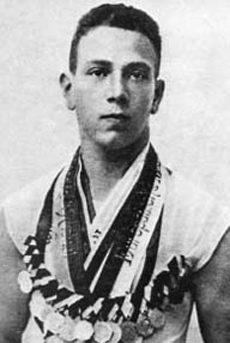
Package Tourist
 On the day that the first Helmut-bashing story of the summer made its way into the tabloid press (cheers, the Sun), I took an impromptu awayday to Great Yarmouth.


There’s more point n’ shoot Great Yarmouth here. Results from my lubed-up manual SLR are forthcoming.
Help Yourself: Turning a Carver-Up into a Barthelme

The internet’s preponderance of self-help evangelists makes me feel rather queasy. Professionally urbane Salon.com’s Since You Asked, by Agony Uncle Cary Tennis is rather different, however.
He mines a somewhat unconventional self-help seam, specialising in readers’ queries about grad school, how to write, environmental conscience and new urbanism alongside more traditional relationships-divorce-parenthood fare. Tennis’ advice column is something like Choose Your Own Adventure penned by Donald Barthelme. For someone whose favourite bits of Barthelme, Pynchon, DeLillo and Updike et al are not the postmodern pyrotechnics, but the heady domestic sublime contained therein, he makes very good reading.
Robert’s World of Magic


 Actually, I don’t have a television.
In this kind of flip-flopping lifestyle dilemma, I’ll side with Viz‘s Modern Parents over 85th Worst Briton Julie Burchill, every time.
Oh, and just for old time’s sake, here’s Burchill and Camille Paglia going head to head by fax.
Writer for hire!

If you’ve landed here looking for business, not pleasure, you’ll need me with my work hat on over here. I’m a freelance writer, editor and researcher and – natch! – always available for commission…
The English, Seen
I’ve been sneaking a peek at photographer Simon Roberts’ work-in-progress We English. He and his family have hit the road in a campervan; he’s documenting scenes from English life to produce a photographic journal of life in England in 2008. You can follow his progress on his blog here.
After a stint in Russia – which produced the startling monograph Motherland – Roberts is turning his lens homeward. In impulse and in method, his English journey reprises the Anglocentric turn of culture in the mid twentieth century moment, when the British Empire’s sun finally set and ravaged by German bombers, English culture began the anxious work of reevaluating, reinterpretating and reconstructing in pursuit of a national identity it seemed to have mislaid.
What’s interesting about Simon Roberts’ work is that his English journey seems so anachronistic. Taking in Cromer Fair, Midhurst Carnival and lawn bowls at Weston-Super-Mare, Roberts’ aesthetic is squarely rooted in the mid century moment. Roberts cites scenes from English life first seen in the work of Bill Brandt, Tony Ray-Jones and Martin Parr. And this is no criticism of Roberts’ endeavour; what his shooting itinerary highlights is how these elements have become a visual grammar of Englishness. On the present, what these archaisms reveal is the pervasive nostalgic feedback loop at the heart of the English cultural imagination.
The same was true of the mid century period during which this photographic lexicon first emerged. As now, these depictions of English life were already old photographs of the present day. Ray-Jones’s knowing archaism, his black and white pathos, was, in his words, the attempt ‘to record the “English way of life” before it becomes more Americanised’. Again, there’s this sense of shoring up a frail culture against its immiment demise.
Ray-Jones needn’t have worried. In Roberts’ (and others’) representations of Englishness, we see that Americanisation is no match for good old English nostalgia, indeed, these archaisms are England – at least in our imagination.


Beachy Head and Beauty Contest, Southport by Tony Ray-Jones
Wot, no Momus?
Inclement weather has stopped play this Whitsun Bank Holiday Monday, so take a look at Caledonia Dreaming, BBC4’s documentary about – ahem – the “hidden history of Scottish pop music”. There’s been moaning n’ groaning elsewhere about this doc’s obvious omissions and its rather strange chronology. If, like me, however, you get excited when stuff you like is on the telly – or you’re dead fond of BBC stock footage of post-industrial malaise – you’ll be keen.
Perhaps skip through its disproportionate focus on “Blue Eyed Soul”, though, unless you’re really into Marti Pellow.
 Jennifer Hodgson