AGRIZOOPHOBIA

The Budapest Zoo somehow manages to segue kitschy ethno-tat into Hitchcockian terror into a thoroughly wholesome day out which at no point prods your animal welfare panic button, as some of our European cousin’s slightly more, shall we say, laissez-faire, attitude to animal conservation is prone to do. No scraggy, dead-eyed Siberian tigers here, only a gorilla eating its own shit, which, I’m told, is completely natural.


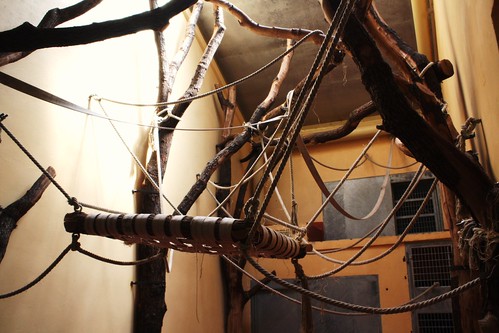
The place seems to have that masochist-zoophobic-with-a-keen-appreciation-for-high-camp market cornered, housing Komodo dragons, cockroaches, a black widow spider and a green mamba in enclosures apparently inspired by the set of The Crystal Maze. There’s a suitably fetid palm house, with a mezzanine level dangling precariously over a pair of nasty alligators, where flying foxes, with binbag wings folded, Dracula-style, get some kip overhead. On the purpose-built concrete “mountain” piles of raw meat engorged by bluebottles await kestrels for luncheon. In the Petting Zoo, frenetic toddlers give Benny Hill chase to bearded goats and bunny wabbits. In the midst of this, the brown bear chews on a mangelica leg, not too bothered by the indignity of his captioner’s thoroughly A.A. Milne take on the ursidae.

WHAT DO YOU DO ALL DAY?

Amongst all the great mysteries of the universe, the one that’s always puzzled me most is, quite simply: What do people do every day?

I have chronic problems with the concept of a daily routine. That’s not to say I’m one of these zany, radical individualists who reject, outright, the mere concept of “daily routine” as a cramp in their revolutionary style. Although I imagine their excuses for staying up past ten on a school night go something like this:

For God’s sake, Mum! Manifesting the kind of life I always knew, deep down, I was supposed to live is pretty knackering! I was up ’til 4AM tirelessly documenting the magic in the everyday with my Soviet-era toy camera and publishing these hitherto-unappreciated small treasures on my blog. All week I’ve been benevolently performing the little acts of kindness that will, one day, change our world for the better. Besides, I’m doing polyphasic sleep this month, remember. Give me a break – I’ll get up when I’m ready!

For me, the problem is rather more banal. Like every terminally-anxious Noughtie, my mental chronometry is completely out of wack. There’s always too little, or, worse, too much time to complete the simplest of tasks. Foolhardily, I’ve also chosen a very modern way of making of living: piecemeal teaching and writing work here-and-there and as-and-when. Though it was chosen for its flexibility (like every other 25 year-old, I have an abject – and, might I add, rather self-important – fear of the nine-to-five) I’ve found myself trying to shape this formless morass of job into a reasonable (but oh-so-conventional) daytime chunk. Which somewhat misses the point of this kind of work (but reveals the terrible insidiousness of the hegemony of routine, right, whimsical internet chaps?)

Anyway, because of this, I’m a very eager student of what other people do all day. The hungry middle manager might have his copy of The Seven Habits of Highly Productive People, but I’m happy to say I get my lifestyle design fundamentals from autobiographies. Actually, I’d recommend the same to all apparently-reasonable people whose trigger fingers hover just a little too long over the Buy it Now button of books of a similar ilk.

Happily, I can now seek guidance whilst engaged in the very deferral activities which doom this whole scheme to failure via Daily Routines, a blog that collects extremely eminent peoples’ methods of organising their days.

ERSATZVAROS


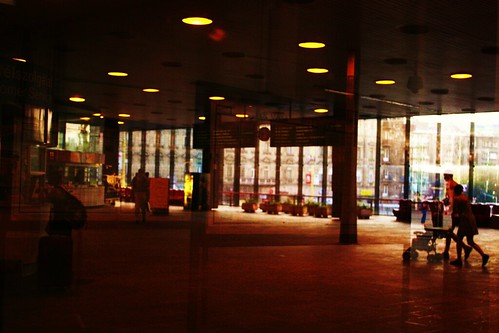
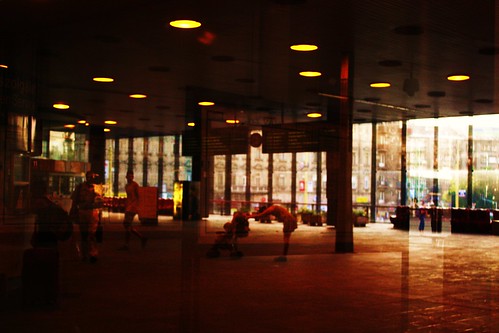
Déli pályaudvar is Budapest’s southern station. Reposed, it looks something like the clubhouse of an exclusive ski resort, collaged out of a colour-saturated postcard of 1967. It might once have been perched at the top of nearby Sas-hegy, supplying off-piste Jagermester and pretzels to Austrians with blonde eyebrows, in thermal unitards. It might have careered down the hill in a landslide sometime in the eighties, ended up wedged behind the var.

You’d be forgiven for not noticing its pedigree, though. From the metro station escalator, you’re flung up into stacked, interconnecting walkways, atria and quadrangles. It’s low-slung dimensions induce a cautious stoop. Like most public spaces in Budapest, it contrives to serve your most obscure consumer whims: antiquarian books, home chiropody kits, lace tableclothes, yellow polyester harem pants, tanning, alongside the usual Budapesti surfeit of pastry snacks, shot-sized coffees and fags.


Budapest’s transport interchanges collect all that is most salty and decrepit in this exceedingly salty and decrepit city. Déli is no exception. Linger longer than a speedy transfer from metro to vonat and you’ll emerge coated with a thin film of clag that is not quite wet and not quite dry.

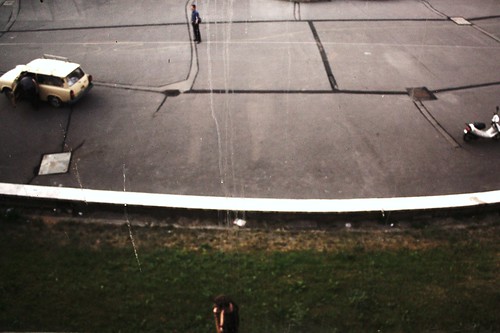
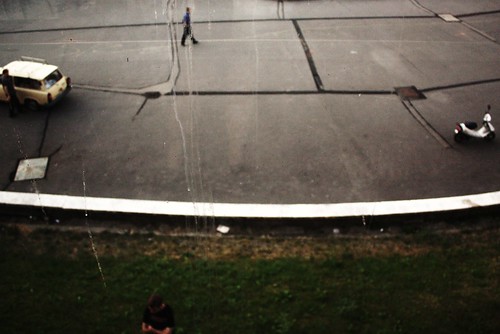
From the curved tinted glass in the ticket hall there’s a brown panorama of the XIIth. The view from Déli is already distorted, vignetted, blurred as through the meniscus lens of a Soviet toy camera.

THE HAVE-NOTS, AS IT TURNED OUT, MAINLY ASPIRED TO HAVING

It was not until we had passed Diamond Head and were coming in low over the reef for landing at Honolulu, however, that I realized what I most disliked about this incident: I disliked it because it had the aspect of a short story, one of those “little epiphany” stories in which the main character glimpses a crisis in a stranger’s life and is moved to see his or her own life in a new light. I was not going to Honolulu because I wanted to see life reduced to a short story. I was going to Honolulu because I wanted to see life expanded to a novel, and I still do.

– Joan Didion, In The Islands

Oh, Joan. Your politics are sour and your frailty aggressive, but as stylist of deep, insurmountable catatonia, you can’t be matched.

RECREATION


After leaving university, I embarked on what I, tongue-ever-in-cheek, called a “portfolio career”. Like a very minor Del Boy, gone legit and working in the glamorous world of provincial PR and marketing (and shilling copy, not cans of best before Spam), I juggled freelance contracts from the extendable table in the corner of our Norwich flat and was paid handsomely, courtesy of government grant or quango funding stream.

At only ten months’ repose, there seems something very anachronistic, very noughties about this way of making a living. It was a very fortuitous means to an end for me, but at the time “going freelance” became more and more attractive to graduates, given the push of a extremely competitive first job market and the pull of the apparently-unlimited opportunities online, accompanied by the kind of aggressive individualism internet culture has fostered.

Since this is a vamp for an anecdote, not a rant, I’ll leave that ellipsis hanging. Suffice to say, it was rather a relief to let those spinning plates fall. Here in Budapest, I earn my daily kenyér as an English teacher (though my beefs about the TEFL industry are a topic for another time too) and I love it. My students are, to a man, both interesting and interested. Moreover, it’s the best cultural education I could have hoped for. When my students finally tire of my provincial bemusement (You mean you really celebrate Christmas on December 6th? and Jesus, you guys really like sour cream, don’t you!), my surest conversational gambit is language teacher fallback: What do you like to do in your freetime?

The Hungarians I’ve met really make the most of it. The social lives of the Zsolts, Attilas and Évas in my charge are a never-ending whirl of wine tastings, horse rising expeditions, hiking trips and family dinners chez anya és apu. In the spirit of “When in Rome…” and in the realisation that hand-wringing and procrastinating probably don’t count as hobbies, we’ve been doing the same.


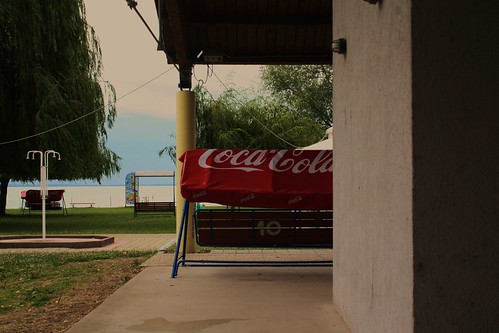
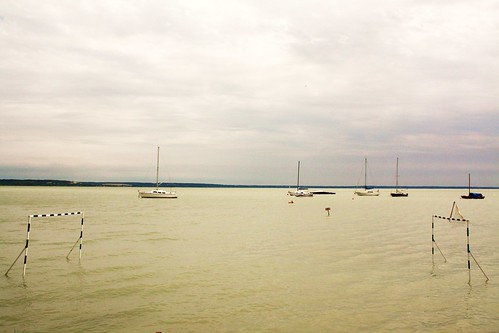
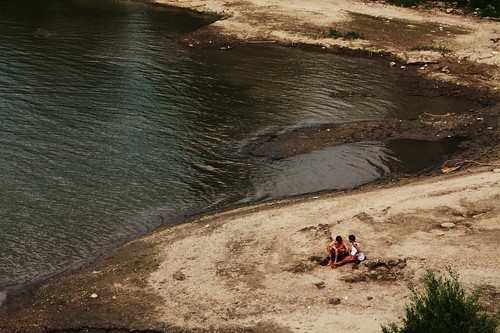
Last weekend, we went to Lake Balaton, Hungary’s own freshwater riviera; playground of the extremely rich, the chronically active and the exceedingly drunk, and the largest freshwater lake in Europe to boot. Our six-man tent was (due to an ongoing plumbing saga) probably better equipped than our home and I spent a very pleasant weekend cooing menacingly at infants, picking pike bones out from between my teeth and lolling around on a patio chair.


I spent my formative years getting sand up my bum on England’s East Coast (and made a life’s work out of sifting through the great rafts of borrowed nostalgia bestowed on me there ever since), but Joe, from Richmond, North Yorkshire – about as landlocked as we Brits can muster – spent his holidays at the Lakes, and there’s more than a passing resemblance here: low-slung huts selling inflatables gathered around car parks, discount supermarkets stocking nothing edible, tow bars and foreign number plates, all-weather dressing with cheap anoraks and sunglasses, “rustic” wooden restaurant terraces and individually-wrapped sliced cheese.


We went to Lake Balaton in search of Hungarians at play, but unseasonable rain kept them all indoors. The paid-admission beaches (actually the strip of turf hemming the lakeside) were deserted and the ice cream sellers had buggered off home. We strolled around the blue-milk lake in the drizzle, Joe trounced me at csocsó and we watched the Condeferations Cup and sipped sewery beer in a tiki hut on the edge of the great, dark mass of water. Contranians both, we were pleased.

THE KINDNESS OF STRANGERS

With its chronic environmental problems, Budapest was never really going to top the list of Liveable Cities. However, if we’re talking about a viable way for people to live together in an urban environment (rather than an index to help multinational corporations and Governments calculate relocation allowances), then there are certainly lessons to be learned from this fine, smoggy, congested European capital. Though your first Saturday morning gasp of fresh air on alighting the bus in the Buda Hills after a week of scuttling around Pest is second-to-none, Budapest gets a lot right.

As I’ve mentioned before, the early glimpse of life on the mainland gleaned from the pages of modern languages textbooks at school – where everyone wore their rucksacks on both shoulders, finished school at lunchtime, earnestly loved the Cure and played a hell of a lot of ping pong – still remains my go-to point of reference for thinking about our European cousins. Even then I knew something was wrong with our own semi-detached way of living, although I could never quite understand Marta, José and Javier’s adoration for the Yellow Magic Orchestra.


High-rollers, diplomats and politicians here in Budapest take palatial villas with exquisitely-landscaped compounds in the hills at Normafa or Roszadomb (prime Saturday morning ogling, if you’re ever in the vicinity). However, Budapestis, by-and-large, live in flats – be they in the glorious, tumble-down apartment blocks of central Pest or the slightly-less-glorious panel houses of Újpest, Újpalota or Kelenföld. And it works rather well. Although Budapest is a capital city, its thoroughly walkable (much of the metro system in the centre of the city is as surplus to requirements as the Covent Garden-Leicester Square stretch of the Piccadilly Line), has distinct, well-amenitied neighbourhoods and – most startlingly – there are actually people walking about on the street after 6pm! I’m not talking about the rather formal promenade of cities like San Sebastian or Seville, but streetlife here (in all its strange, unctuous forms – when Google Street View finally makes it here, they’ll be prime ogling there too) continues long after close-of-play.

This last part has long been a problem for provincial cities in the UK (and for once, I mean that in the most London-centric way possible). We just don’t seem to get the hang of getting up and having a walk around. In Norwich and Hull (the cities that, for my sins, I feel most able to comment upon), come six o’ clock inhabitants would flee to their homes to get tucked up safe away from, well, all the people who live there. If you dawdle, or, say, fancy a stroll, you face a O.K. Corral of paranoia with that tough-looking chap walking in the opposite direction down the High Street. In fact, if you were feeling a bit Daddishly pithy, you might say that under these circumstances you could begin to see the point of Bill Drummond and Iain Sinclair’s psychogeographic simonizing of perambulation.


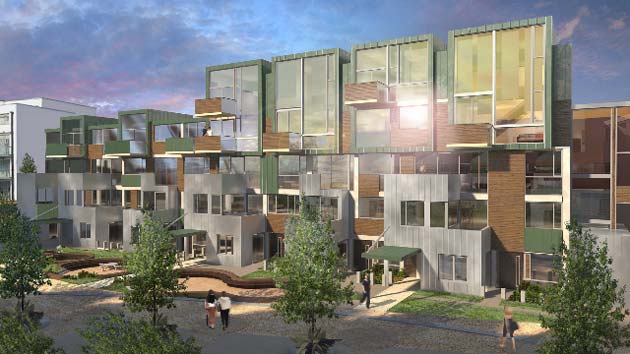
It’s unfortunate that talk of declining community values in Britain should traditionally have a Littlejohnish bent, as Mr Tolerance himself would be the last likely tenant in the experimental mixed housing schemes that are valiantly attempting to counter the complex of problems around society and sustainability in the UK. Elsewhere, with the growth of riverside developments – albeit with the barf-inducing rebranding of flats as European-style apartment living – we seemed to be getting the idea. However, the economic crisis has meant fewer are willing to invest in – or, indeed, afford – in a pricy single storey. What’s more, whilst a sizeable proportion of British people still live in the mistakes thrown up during post-war redevelopment, there will always be a deep-rooted suspicion of high density housing. It remains to be seen whether you really can prise the Englishman from his semi-detached castle.