
Author: jenniferhodgson
Writer, editor, researcher
THE CONVERSATION
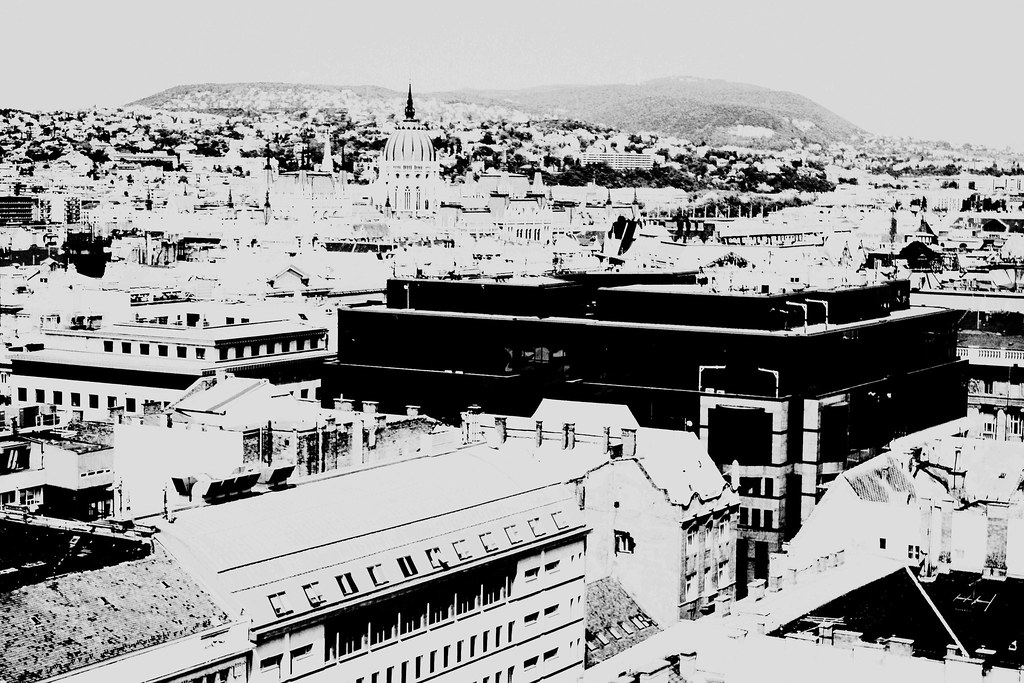
Incipient nark due to painful Burton on the stairs late last week quickly curtailed by this astonishing view from Szent-Istvan Bazilika.

Not quite Union Square, but definitely a Polanski view of the city – with iconography to match.
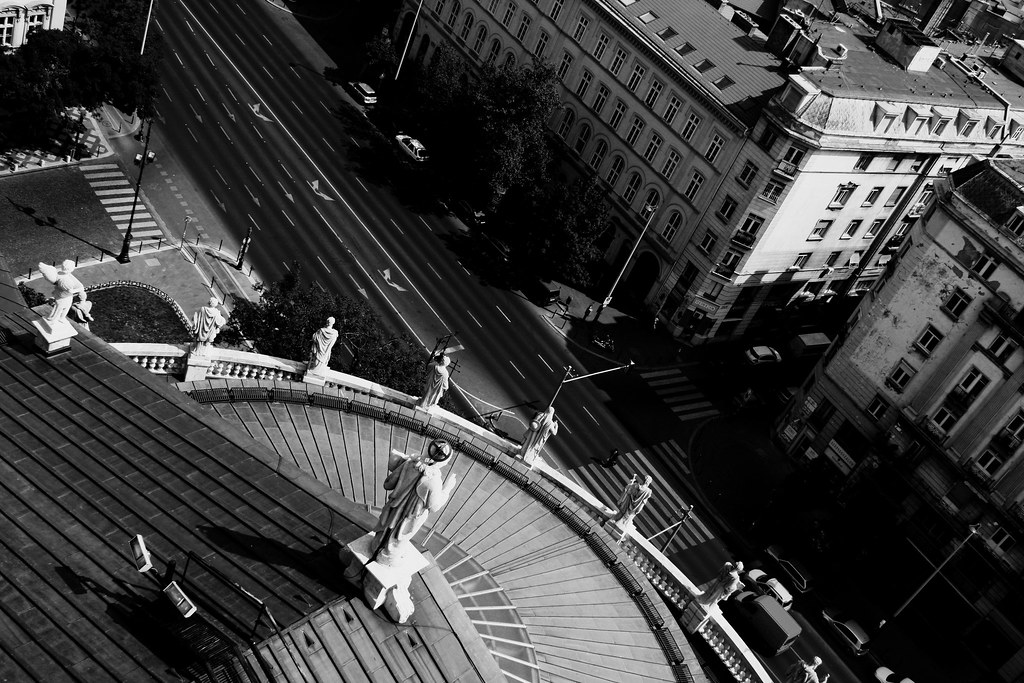
On Loving Angels, Instead

 I leave the window open every time I go to sleep, just so she can come in. Just so she can be with me. Jack Tweed, OK! Magazine, April 7 2009
The popular response to the death of Jade Goody from cervical cancer some weeks ago took its cues from the interminable vamp in the tabloid press in the weeks and months leading up to her death. Her very public mourning has made us feel most uncomfortable: those badly-spelt tributes on The Sun’s message boards, those cheap wreaths stacked outside St John the Baptist Church, those pinch-faced women toting half-deflated helium balloons outside her home in Upshire. Yuck, the rank whiff of British working class sentimentalism. We’re a commemorative plate away from Lady Di territory here. Thank God for The Guardian, then! Their commentary straddles – hand-wringing and superior – over the tabloid dross pile, asking just what does the death of this 27 year-old woman teach us about ourselves? Matching sub-Baudrillardian analysis (postmodern!) with touching anecdotes (poignant!), they conclude: not much, but it’s terribly sad!
However, I’m not here to take potshots at The Guardian, not today anyway. Instead I want to talk about the sudden appearance of supernatural beings in our most rational of Kingdoms. I’m talking, of course, about the angels in our midst.
 Here’s some rather bilious cut-and-pasting from the BBC comments board to illustrate:
God bless the brand new angel and u will never forgotten u were a great woman. Jade Goody passed away to heaven as an angel. God needed another angel. R.I.P Jade. Its been a week since god blessed the sky with a new angel… the stars are shining bright for your boys Jade.
A very peculiar lexicon has emerged out of our response to these very public deaths over the last twelve years since the big one, the one that started it all, the one that we’re all rather embarassed about. It’s a language that is shared not only between those with the poor spelling and the Interflora wreaths, but also – curiously – those with the university degrees and respected careers in journalism who are currently employees of Richard Desmond. One arranged around some kind of quasi-religious myth, which bowdlerises its basic structure from Catholicism, its rhetoric from OK! Magazine and its iconography from Anne Geddes.
In postwar Britain, our shaky sense of the real brought a raft of moral, occultist and mystical dogma, all compensating for the decline in religious faith – those old, sacred, survival fictions. The brittle social satires of Muriel Spark, early Christine Brooke-Rose and Angus Wilson depict a nation busily crafting their own ersatz meaning-making machines. Their characters are epistemological bricoleurs, rehashing old moral systems or creating new technological and scientific cults with which to make sense of a world after rationalism, after Freud, after Einstein, de Broglie, Planck and Heisenberg. In our own, rather drab, Franklin Mint mass hysteria, in our new moral maudlinism, we too – to borrow Muriel Spark’s phrase from The Comforters – are displaying our own ‘turbulent mythical dimensions’ under extreme duress.
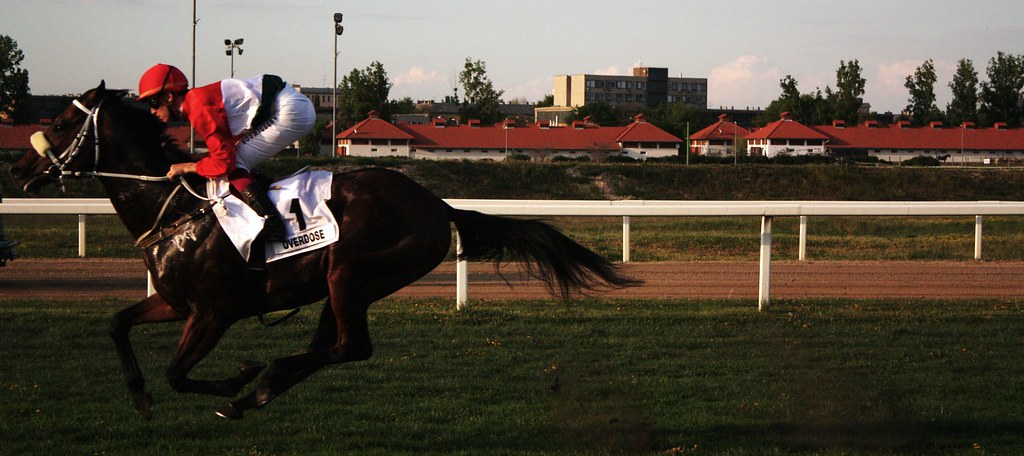
Overdose, the Wonder Horse
GUESS WHO I SAW IN PARIS?

I usually end up in Paris in-transit, at 7am, straight off a late-night, Dover-Calais ferry with 12 hours to kill before catching the night train south to the Basque Country. In fact, the one time I actually went there for an overnighter is indelibly marked by the roughhouse groping I received on Boulevard de la Chapelle. Each time, early doors, before our layover begins to drag with 10€ steak-sponges, blisters, nark and catatonic meanders in the Forum les Halles shopping mall, I always make a beeline for 5 bis Rue de Verneuil, Serge Gainsbourg’s former home off the Champs Elysee. Many others do the same: the high wall that hems Serge’s Paris house is covered with stencilled grafitti and scrawled messages of respect, admiration, desire. Each time, I kick my heels on the kerbside, astonished by the kind of (not cultish or kitschy, but truly popular) devotion he inspires.
Currently, 18 years after his death, Serge’s house remains pretty much as he left it. Not that you’d be able to tell from the street; his family have installed security gates to keep devotees out. In 2007, it was reported that Charlotte Gainsbourg, his famous daughter, was hoping to convert it into a museum. For now, here’s a look inside from Vogue Paris in 2007.


 (Pictures via gnarlitude.com)
FUCKING UGLY BUILDINGS II
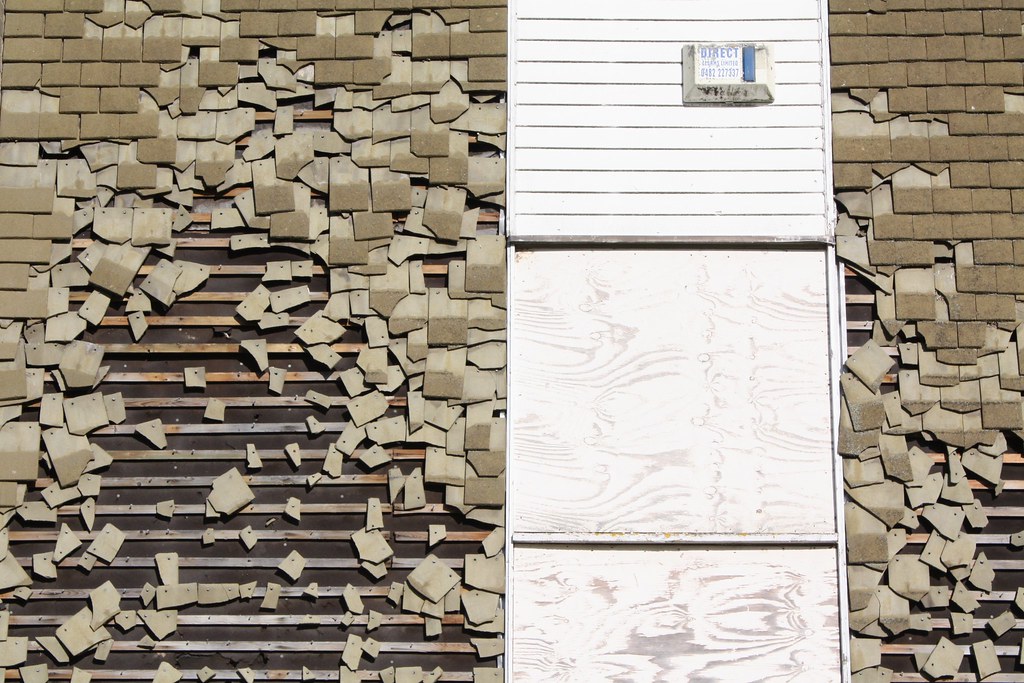
This is a detail from a house on Ings Road Estate in East Hull. My mum and auntie were brought up here, indeed my grandparents and uncle still live here, in the rubble of their vanishing estate, still reluctantly prospecting other places to live.. As a child, the houses here, built on the whim of social housing planners, always seemed pretty magical to me: half brick, half panelling, they seemed like exotic Swiss chalets from the perspective of a small girl who lived in a Victorian semi.
They’re going… going.. gone now. The whole area used to be council estate, but the Barrett homes are encroaching, land values have had increased (Hull, with its ever-proliferating regeneration programmes was a latercomer to the property boom), and the developers have razed the estate to the ground bit-by-bit to build newer, probably even dafter-looking homes.
DEFECTIVE JUNCTION BOX, NEW MALDEN
When I first decided (a couple of years ago, in a post-degree jag of self-improvement) that the thing I wanted most was to become a proficient photographer, I first (such an Englishwoman, never quite comfortable with the fact of her own creative impulses) amassed a collection of books on the subject. One of those was Roland Barthes’ Camera Lucida, wherein Susan Sontag’s foreword describes Barthes’ critical dandyism. Sontag explores the process by which the Critic-Dandy chooses to collect certain objects into their discourse. For her, the objects are selected according to a kind of polyphonic whimsy, which draws more, and more various, objects together to form a diorama of the critic’s individual taste.
Her admission of the critic’s personal investment in the Things he critiques is as simple as asking “Why do you like what you like?”, but I think its often overlooked: too personal, too emotional, too human. In this essay on Barthes, Sontag is concerned with feeling the shape of Barthes’ oeuvre; its ‘retroactive completeness’, the patterns and preoccupations that emerge fully in hindsight. I’ve been thinking for some time about how this process can be traced backwards, how childhood predilections and obsessions feed our critical bent in adulthood.
All of this is proving a rather long and ponderous vamp to a clip of Reggie finally “seducing” Joan in The Fall and Rise of Reginald Perrin. I remember watching reruns of this melancholy and terminally dreary BBC comedy, and somehow knowing that it would come in handy later. As a pretty self-defeating 10 year-old, this small ping of recognition would generally mean I obstinately stopped paying attention, but the brown absurdism of this tremendously sad programme still took root, clearly.
JENNIFER HODGSON IS PERHAPS THE MOST INTENSELY GROWTH-ORIENTATED INDIVIDUAL YOU WILL EVER MEET!
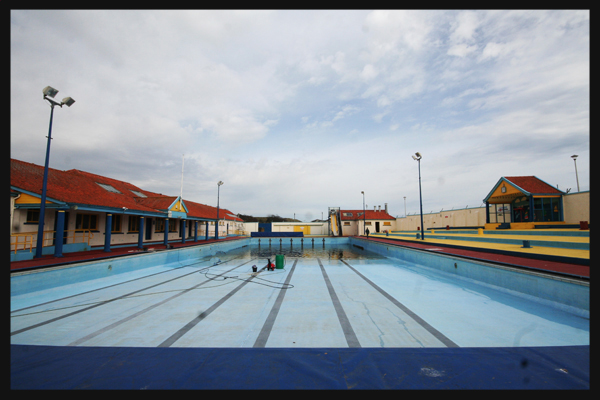
Though I bitch n’ moan about the misuses of the internet rather a lot (blog monetarisation, the Raw Food movement, online personal development gurus – “you too can finally experience the kind of life that deep down you always knew you were meant to live” – and personal branding passim) one of its very best functions is, I think, as a sort of clubhouse for enthusiasts and connoisseurs of all shades to guild together and gently indulge their bent, however obscure.
8333696’s collection of pictures of abandoned and disused buildings is a fine example. She’s one of a hardy band of benign trespassers (I believe the term correct term is Urban Explorers) who tote their cameras to places they shouldn’t be (derelict lidos, asylums, factories, power stations) and chronicle what they find.
BABA I BUDA
Swedish television’s 1936 film, Bathing in Buda.
(via Pestiside.hu)
http://svt.se/embededflash/1371245/play.swf
FUCKING UGLY BUILDINGS
I hate how noone ever talks about how bad British architecture really is. I hate the bastards who make these buildings. So here I am, taking the piss out of them.
Yes, mate! Read and see more here on The Ghost of (Ian) Nairn’s blog Bad British Architecture.
 Jennifer Hodgson
